
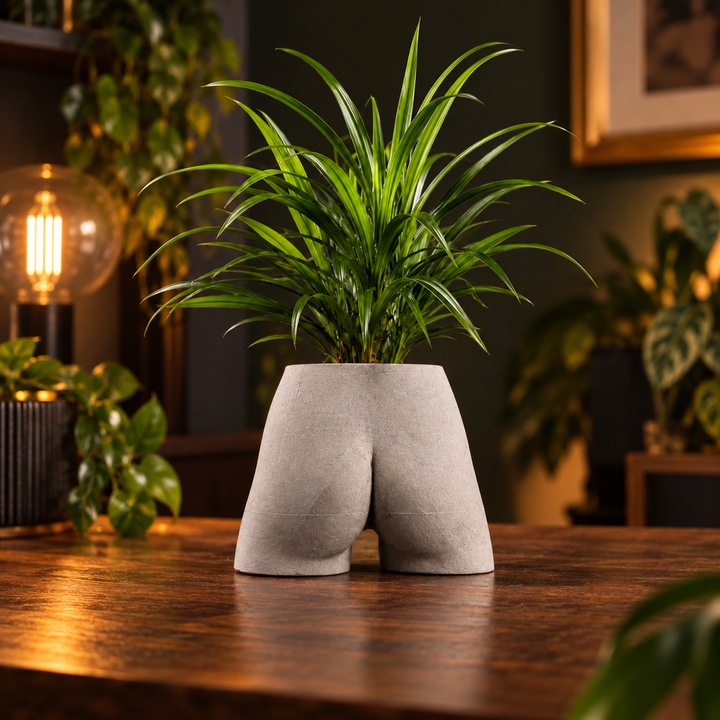
Bum Planter | Cheeky Cast Stone Plant Pot
From $73.00
View product: Bum Planter | Cheeky Cast Stone Plant PotPopular searches
Quick read: “Cement planter” and “concrete planter” are often used loosely. Cement is the binding ingredient; concrete combines a binder with aggregate and water. The label alone does not tell you the exact mix, finish, drainage, weight or outdoor suitability.
To see a cast stone planter for yourself, look at the Bum Planter, made to order.
New to Ripleys Nest? Join the list for 10% off your first order.
Cement is a powder that binds other ingredients. Concrete is a composite material made with a binder, aggregate and water. Retailers may use either word in a product name, so ask about the material and finish of the actual piece rather than treating the name as a performance specification.
Composition, casting, curing, wall geometry and finish all affect how a planter behaves. Ask whether it is poured, hand-cast, hypertufa, resin or a concrete-effect product. Ask for the approximate weight, drainage arrangement, intended position and care guidance. Weight can help with stability and handling, but it is not a reliable stand-in for density or durability.
Hypertufa and other lightweight mixes can be more porous and easier to move than a dense cast piece. That may suit a trough or a weight-limited position, while the same porosity can affect strength, moisture and exposure. Use the maker's guidance for the exact composition and do not apply a generic frost threshold or lifespan to every lightweight mix.
Check for a drainage hole, enough planting space and a suitable liner or saucer. New cementitious surfaces can change the growing medium while they settle, so ask the maker whether the planter is ready for your plant and whether a liner is recommended. Do not use a vinegar treatment or a fixed leaching period unless the maker gives that instruction for the exact product.
Use the actual product weight and include compost, water and the plant when checking a shelf, balcony, roof or raised surface. A heavy planter may resist movement, but it still needs a stable base and safe access. A lighter option may be more practical where load or handling is the main constraint.
| Question | What to check |
|---|---|
| What does the listing mean by cement or concrete? | Confirm the binder, aggregate, other fillers and the finish of the actual piece. |
| Is it suitable for my position? | Ask about indoor, sheltered or exposed outdoor use, water, wind and freezing. |
| How should I plant it? | Check drainage, liner, planting space and maker guidance for the plant you have chosen. |
| How will I move and support it? | Use the actual empty and filled load, the base and the load limit of the surface. |
| How should I clean or treat it? | Follow the exact care and finish instructions; do not borrow a recipe from another product. |
Use a soft brush, warm water and mild soap only where compatible, then rinse clean and let the piece dry naturally. Check drainage and the surface after severe weather. Ask the maker before applying a coating or using an acidic cleaner.
From $73.00
View product: Bum Planter | Cheeky Cast Stone Plant Pot


Your basket is empty
Or start with an aisle


