

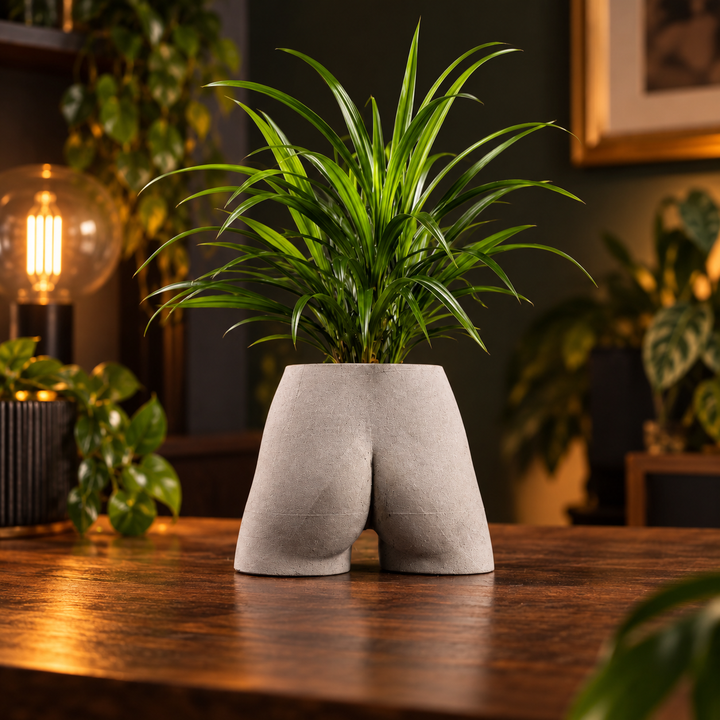
Cement vs Concrete Planters (and Steel): Are They Good for Plants?
Short answer: Cement is an ingredient; concrete is the finished material, made of cement, water and aggregate such as sand and gravel. So a "cement planter" is nearly always a concrete planter. Concrete and cement pots are good for plants when they have a drainage hole, stand clear of standing water in winter and suit the plant's spot. The label matters less than those three things.
Looking for the pieces themselves? See our unusual plant pots and sculptural planters.
What is the difference between cement and concrete?
Cement is the powder that binds. Mixed with water it hardens; mixed with water and aggregate (sand, gravel or crushed stone) it makes concrete. A typical concrete mix contains up to 15% cement, citing the Portland Cement Association. Cast stone, in the UK Cast Stone Association and British Standard definition, is any material made with natural aggregates and a cement binder, intended to resemble and be used like natural stone.
| Word on the label | What it usually means |
|---|---|
| Cement planter | A concrete or mortar pot; "cement" is used loosely |
| Concrete planter | Cement, water and aggregate, poured or cast |
| Cast stone planter | Concrete cast to look like stone, often finer and denser on the surface |
| Steel planter | A thin metal shell; light for its size, with no stone at all |
Are concrete planters good for plants?
Yes, when the basics are right. The RHS calls drainage holes essential for containers, so check for one, or keep the plant in a nursery pot inside and lift it out to water. Heavy pots resist wind, which helps outdoors; the RHS suggests a sheltered spot for tall, narrow containers that could blow over.
In winter the RHS advises frost-proof rather than merely frost-resistant pots, raising containers on pot feet or bricks so drainage holes stay clear, and removing saucers so pots are not left standing in water.
Steel vs concrete planters: which should you choose?
Choose by the spot. Concrete and cast stone are heavy and steady, which suits a windy patio and a ground-level position. Steel is far lighter for the same size, which suits a balcony or roof terrace where weight matters. Either way, check the drainage, the load the surface can take (with compost and water added) and whether the maker says the planter can stay out in frost.
Are cement pots good for indoor plants?
They work well indoors with a nursery pot inside and a saucer or tray under it, so water never sits on the furniture. Many sculptural planters, including several of ours, are made for indoors to protect a hand-painted finish.
What are our planters made of?
Each product page names its material. Most of our sculptural planters are cast stone, painted by hand, for example the bum planter and the David and Venus torso planters. Our mirror-tiled disco planters are a different material, so always read the page of the piece you like.
Questions
Is a cement planter the same as a concrete planter?
Usually, yes. Cement is the binder inside concrete, so most "cement" pots are concrete or mortar.
Are concrete planters good for plants?
Yes, with a drainage hole or an inner nursery pot, and with the pot kept out of standing water in winter.
Do concrete planters crack in frost?
Water freezing in a wet pot is what does the damage. Choose a pot sold as frost-proof, raise it on pot feet and remove the saucer for winter, as the RHS advises.
Steel or concrete for a balcony?
Steel is far lighter. Check what the balcony can carry once the planter is full of wet compost.
See our unusual plant pots and sculptural planters, each with its material, size and planting notes.
Sources
From our shop
Compare sculptural planters


Choose an option


Sculpted Planters
David and Venus Torso Planters
Regular price
From $118.00
Sale price
Regular price
Choose an option


Choose an option


Choose an option


Choose an option


Choose an option


Sculpted Planters
Adire Night African Woman Head Planter
Regular price
$117.00
Sale price
Regular price
Choose an option


Sculpted Planters
Gothic Head Planter, Twin Bowl Face Plant Pot
Regular price
$152.00
Sale price
Regular price